|
|
|
Amigos w/ Common Interests
|
|
|
|
|
|
|
|
|
|
|
|
|
|
|
|
|
|
<<
View Prev Image
|
|
|
|
View Next Image >>
|
|
|
|
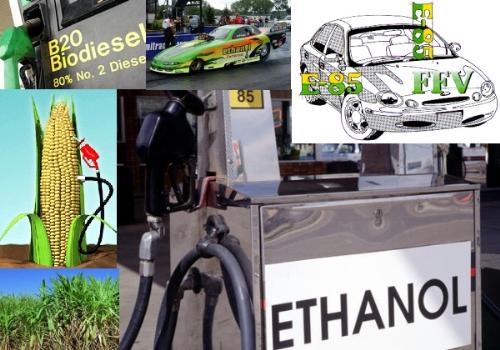
Biodiesel, which is the name of a clean burning, renewable diesel fuel replacement made from vegetable oils or animal fats. The methyl ester of vegetable oil or what we now call Biodiesel is very similar to the petrochemical based diesel fuel that it replaces, so does not require any vehicle or storage modifications.
The main benefits derived from using Biodiesel come from the reduction in tail pipe emissions and the diesel fuel consumer can now ensure that their fuel money stays in America rather than going overseas.
Mixing Biodiesel with Petrol-Diesel
Biodiesel can be used as a pure fuel or blended with petroleum in any percentage. B5, a blend of 5% Biodiesel and 95% by volume of petroleum diesel has shown improvements in performance, enhanced lubricity and some reduction in emissions. A blend of 20 percent by volume Biodiesel with 80 percent by volume petroleum diesel called B20, has demonstrated significant environmental benefits with a minimum increase in cost.
Ethanol
Why aren't oil companies using ethanol to lower gas prices? Their bottom line – not the consumer's – seems to be the answer.
A study released today by the Consumer Federation of America outlines how, contrary to rational economic expectations, oil companies are not expanding their purchases of lower-priced ethanol, but are continuing to purchase expensive crude oil and raise gasoline prices to consumers.
Across the country, consumers are facing the highest gasoline prices in memory, while oil companies are reporting record profits. The study notes a recent Wall Street Journal report that stated, “Exxon Mobil Corp. is gushing money. Amid soaring crude oil prices, it recently reported a fourth-quarter profit that amounted to the fattest quarterly take for a publicly traded U.S. company ever: $8.4 billion. That translated into $3.8 million an hour.”
Meanwhile, ethanol prices have declined since the beginning of the year, with wholesale prices now around $1.20 per gallon. Using a 10 percent blend of ethanol would save consumers as much as eight cents per gallon at the pump. Wouldn't it make sense to use cost-effective ethanol to moderate the record high prices drivers are paying for gasoline?
“The bottom line is that blending lower-cost ethanol with higher-cost gasoline will bring down the overall cost of the fuel for the consumer,” said Ron Lamberty, Vice President / Market Development for the American Coalition for Ethanol (ACE). “With plentiful supplies of ethanol ready and waiting, it's clear that oil companies are consciously choosing not to use an economical, domestically produced fuel and are instead choosing to import more crude oil and finished gasoline at record high prices – and record high profits.”
“This scenario makes it clear that a national energy policy is necessary to ensure domestically produced renewable fuels are used, because left to their own devices, some oil companies will never choose ethanol – even when the economic benefits are this unmistakable,” said Brian Jennings, ACE Executive Vice President.
Ethanol Fast Facts:
U.S. ethanol production capacity is expected to reach 4 billion gallons this year.
Gasoline with 10% ethanol is approved, and often recommended, for any automobile.
The Indy Car ® Series has announced a switch to high-octane, high-performance ethanol fuel.
The growth in ethanol production today is driven by farmer- and locally-owned facilities.
Ethanol is a clean-burning fuel that reduces harmful emissions and improves air quality.
At the gas station here, they are selling E-85.
What is E85?
E85 is a blend of 85% ethanol and 15% unleaded gasoline for use in Flexible Fuel Vehicles (FFVs). E85 is classified as an Alternative Fuel by the U.S. Department of Energy.
What is a Flexible Fuel Vehicle?
A Flexible Fuel Vehicle (FFV) is a vehicle that can operate on any blend of ethanol up to 85%. If E85 is not available, the vehicle can operate on straight unleaded gasoline or any percentage of ethanol up to 85%.
Many major automakers including Daimler Chrysler, Ford, General Motors, Mazda, Mercury, Isuzu, and Mercedes manufacture vehicles that can operate on E85. FFVs have been produced for several years, and the number of E85-compatible makes and models is increasing each year.
|
|
|
|
|
|
| |
|
|
|
|