|
|
|
|
|
|
|
Amigos w/ Common Interests
|
|
|
|
|
|
|
|
|
|
|
|
|
|
|
|
|
|
<<
View Prev Image
|
|
|
|
View Next Image >>
|
|
|
|
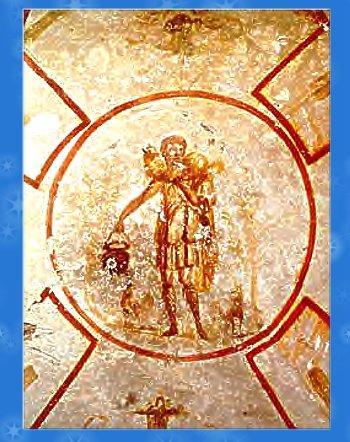
This painting is among many of the frescoes painted on the cavernous walls of the Christian catacombs in Rome.
It is referred to as "The Good Shepherd". Sometime between 100-300 A.D., Roman Christians who were being persecuted by the empire chose to bury their dead in caves or catacombs outside of the city.
The pagan Romans practiced cremation, which the Christians did not want any part of.
Catacombs were also used as meeting places. Christians gathered in the tombs for funeral rites and used the space to freely display early Christian symbols such as the IXTHYS or Christian "fish".
They believed that it was prudent to use the space of the caves efficiently so that as many Christian brothers and sisters who were buried together would be joined again more quickly on the "Last Day".
Although Christians were being persecuted within the city walls, they were mostly left alone to their tombs. They were careful not to use outwardly Christian images such as the Cross, but because Roman law did not allow the destruction of any tombs, their catacombs were safe from being destroyed.
|
|
|
|
|
|
| |
|
|
|
|
|
|
|